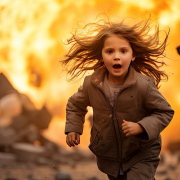
A whole new website where you can find all the informations about your safety – in one place.

Sigurno.info is a website that talks about general safety (sigurno = safe) . The site is still in development, but the main goals are:

1. To collect all the safety protocols and information in one place.

2. To be a reliable source of information.

3. To prevent initial panic.

4. To react better in case of accidents and emergency situations.


After the pandemic, followed by an earthquake in Croatia, a lot of people were left traumatized. Moreover, aggression on Ukraine that could escalate into a global conflict raises additional concerns. Can it get any worse than that? Some would argue that in situations like these, we shouldn’t scare people even further by writing about other potential accidents and emergency situations.

Even so, the goal of the Sigurno.info website is not to evoke a continuous state of worry, but rather the opposite – it’s to collect all the simple and quick tips on how to keep safe in crisis, and by doing that – achieve calm and quick reaction in emergency situations. You might be asking, is this even possible?

We think it is possible. In reality, people in Croatia who have already experienced the devastating consequences of war, in their lifetime also witnessed serious injuries, faced death, and had to worry about the health of their child, and the potential of losing a job or property.
Long time ago we used to laugh at the actions like “Nothing Can Surprise Us” organized by State Civil Protection in former Yugoslavia. We didn’t see the point in having underground shelters when the Second World War was forgotten long time ago, and we all complained about how unnecessary is to have mandatory military service. It turns out that “the devil never sleeps”, and that it’s always good to be ready and prepared for the various troubles in life.

Our website will be providing links to official data from state services that are in charge of different crisis protocols, as well as expert advice. Even if we consider that many of us are familiar with the basics of providing first aid (which we had to pass exam when acquiring our driver’s license), we believe that there is still a lot more to be said about safety. Our website Sigurno.info should become the ultimate security guide for your whole family and your property.
We will cover themes from the consequences of abuse in the workplace, domestic violence, theft, public violence and riots, up to the current war conflicts. Some of these issues can (at least to a certain degree) be managed if we are more informed and prepared for emergencies.

The concept of safety during a war conflict sounds like an oxymoron, and of course, no one can guarantee safety during global catastrophes, but quality information and preparation are the preconditions for minimizing risk. This can at least help us navigate through these dangerous situations a little bit better.

Sigurno.info was created by Croatian company Euro Communications from Samobor near Zagreb (HERE), and in collaboration with our expert associates who have many years of experience in different fields of public safety and security.

Stay tuned!

(Photo: Freepik)

The fire and tragedy at a Swiss ski resort—where, in a country otherwise known for strict compliance with regulations, children lost their lives in a fire that appears to have occurred precisely because the rules were not followed—strike at the very core of the issues we address on our portal.

Even when appropriate rules are applied in high-risk places, that is no guarantee that something won’t go wrong. It is even less certain that someone else will protect you if you yourself have not done everything possible to at least reduce the consequences of a potential accident. It is unlikely that parents will go and inspect the venue where their child is attending a celebration to see what the conditions are like. It is impossible to predict what kind of foolish decision the venue owners might make—such as lining the ceiling with highly flammable, fast-burning material. And in a basement room, no less. Who could have imagined that someone would climb onto a friend’s shoulders and use sparklers to set the ceiling on fire? Many will say, “We did even stupider things when we were young.”

Still, if you have read the advice on our portal about behavior at events where large numbers of people gather, you could have learned how important it is to follow instructions on how to act once an accident has already occurred. It is clear that young people who are having a great time will not immediately grasp how dangerous a fire is in a room they cannot leave quickly, so they excitedly shout and record the initial fire on their phones (which at that moment could still be put out), instead of extinguishing it quickly or leaving the room.

Likewise, it is unlikely that any of the visitors, upon arrival, checked where the fire extinguishers were located or which route could be used to exit quickly. Yet these are small details that can sometimes save your life.

That is why we advise you to talk to your children before they go out. Warn them about possible dangers, even if it seems to you that they are not listening. There is a chance they will remember at least some advice and act responsibly in a dangerous situation. Read about the topics we cover on the Sigurno.info website and briefly explain them to your children at the right moment.

However, when we see reports of severe injuries that children suffer from holiday fireworks—when parents buy dangerous pyrotechnics for their children and, without any preparation, let them use devices containing amounts of explosive material comparable to a hand grenade—it is clear that, as parents, we ourselves could do much more.

(Illustration by Freepik)

How to respond to this question increasingly asked by concerned family members?

In the current global situation, with 190 armed conflicts ongoing and thousands dead or wounded worldwide (you can see detailed data HERE in a study published under the UCDP conflict research program), it’s not easy to provide an answer that won’t cause panic or depression. Due to the overwhelming wave of bad news, people are becoming more anxious and are starting to ask themselves and their families a key question – what should we do if the worst happens?

Although daily sensationalist news often turns out to be false, and the media frequently predicts the end of the world (if not from war, then from storms, disease, or some other disaster), which we somehow manage to survive – we should never underestimate human stupidity and destructiveness. Therefore, without panic, we should consider potential dangers and do everything we can to reduce the impact of crisis situations. Most importantly – try to follow information from reliable sources, without sensationalism or planted fake news. You can read more about that HERE.

As for war, unfortunately, we have experience and don’t need anyone to explain how people are capable of the worst atrocities (a term that is, at times, actually insulting to animals). Still, aside from the immediate danger of war, there are many associated risks such as disruptions in the supply of food, energy, transportation issues, and similar problems that affect millions of people.

It is also clear that in wartime conflicts, targets are not chosen carefully – civilians are deliberately and massively killed, and civilian infrastructure is destroyed. That too must be taken into account when planning protective measures.

As always in worst-case scenarios, important decisions must be made quickly: Should we stay or leave? When and where should we evacuate the children? Do we have enough food and water? These are questions we must prepare for in advance – assess the risks, agree on details within the family, and ensure we avoid creating panic, especially when informing children about such topics in an age-appropriate way.

> MILITARY SERVICE
One way to protect ourselves in wartime circumstances is to take up arms and defend ourselves. It’s clear that no sane person wants to send their children to “learn how to kill,” but we’re happy to send them to a self-defense course in case they are attacked. So it should be clear that military service can also be useful – if it is organized properly.

All of us who served in the military in the former state often considered our time in the Yugoslav People’s Army (JNA) as the most useless part of our lives, convinced we had learned nothing of value. However, as outdated and mentally numbing as the training was, we were wrong. Some of the skills we learned later helped us aid people in distress and defend ourselves against aggression.

Still, it’s important to understand that assessing the safety of your family isn’t only about worst-case war scenarios.

> COTTAGE / HOLIDAY HOME
After the pandemic and earthquakes, it became clear that a weekend house, coastal cottage, or family home in the countryside can serve as a practical shelter for a few days during a crisis. Thinking about having enough food and drinking water at such locations isn’t just a concern for preppers or those expecting doomsday. Talk to your family and friends about alternative accommodation options if you don’t have one of your own.

> SUPPLY
You can read more on our website about the challenges of supply chains in crisis situations. Many well-organized Western countries have detailed guidelines for citizens – how to prepare for survival in emergencies, including wartime conditions. Consider creating a small stockpile of food and water for a few days.

> TRANSPORT
In crisis situations, make sure you have a full fuel tank in case evacuation becomes necessary, stay up to date on traffic conditions (via HAK info, mobile traffic apps), and prepare a bag with essential gear. You can read more about this HERE.

> INFORMATION AND COMMUNICATION
Real-time information about a crisis is essential for making decisions. Today, modern systems provide information not only through the internet, radio, and TV, but also via a wide variety of mobile apps – it’s important to test these and learn how to use them.

Of course, don’t forget about potential problems with mobile network availability or internet access. Be ready to rely on a radio receiver – even amateur (HAM) radios – for critical information.

> SHELTERS
During the Homeland War, we learned the importance of shelters. It’s a good idea to check with local authorities where the shelters are located, what condition they’re in, or what you can do to improve protective measures in your own home. It’s also an opportunity to evaluate your home’s safety not just for wartime, but for other disasters such as natural catastrophes, fires, floods, lightning strikes, or access for emergency vehicles.
It’s also wise to read up on survival equipment and procedures – there are plenty of resources available online, including on our own website HERE.

In any case, whatever happens – don’t panic. Prepare reasonably and according to your capabilities, keeping in mind that the worst may never come.

(Illustration: Freepik)

Living in the Age of Post-Truth and Preparing for Its Consequences.  

As we’ve already discussed on our website (see HERE), lies, misinformation, manipulation, hybrid threats, misuse of new media, and the chaos of social networks have become such pervasive issues that we seem to have forgotten what truth really means.

While one could argue that all this reflects a form of societal madness, when it comes to security, the systematic spread of lies can have serious consequences. Therefore, it is never excessive to remind ourselves to be aware of what’s ahead.

Philosophers once sought the truth; today, it’s a topic that, as though it’s a completely new concept, grabs the attention of the public and media (whatever their nature). Lies have become so dominant and difficult to discern that even books about them have gained popularity. Noteworthy recent works range from witty observations filled with truth, like Tom Phillips’ humorous book “Truth: A Brief History of Total Bullsht”*, to the bestseller by Swedish scientist Åsa Wikforss, “Alternative Facts: On Knowledge and Its Enemies.”

However, as leading intellectuals and scientists attempt to make sense of what on earth is happening to us, wars rage worldwide, lunatics in power threaten to use nuclear weapons, and after years of environmental destruction, nature is pushing us toward global catastrophe.

Yet, lies are not a new invention. They’ve always been with us. It’s no coincidence that we often cite Machiavelli, who as far back as 1521 wrote: “For a long time, I have neither said what I believe nor believed what I said, and if I happen to utter a truth, I hide it among so many lies that it becomes hard to find.”

Today, even robots know that fake news circulating online is dangerous. To verify this, we asked artificial intelligence what the dangers of fake news are, and here’s the response:

The Dangers of Fake News:

1.Erosion of Trust in Media and Institutions
Fake news erodes trust in journalism, political institutions, and experts. Constant exposure to false information makes people skeptical of reliable sources, undermining social cohesion and trust in democratic processes.

2.Polarization of Society
Fake news is often deliberately spread to deepen existing societal divides, fueling conflict and extremism. It manipulates emotions, creating stronger feelings of anger, fear, or hatred toward specific groups or individuals.

3.Impact on Democratic Processes
Fake news can disrupt elections and political processes by spreading disinformation about candidates, parties, or key issues. It manipulates voters or undermines trust in election results, destabilizing democracies.

4.Manipulation of Public Opinion
Fake news creators often steer public opinion toward specific political or economic goals. Such misinformation is used to sway public opinion in favor of certain laws, products, or political movements.

5.Health and Safety Risks
Fake news about health, such as misinformation on vaccines or COVID-19, can lead to dangerous outcomes. It fosters mistrust in medical professionals and health systems, resulting in fewer vaccinations, poorer health outcomes, or disregard for safety recommendations.

6.Economic Consequences
Fake news can directly impact the economy by spreading misinformation about companies, markets, or products, leading to stock price drops, consumer mistrust, or market destabilization.

7.Hybrid Threats and Cybersecurity
Fake news is often part of broader hybrid warfare strategies, used alongside cyberattacks to destabilize states. Such misinformation can incite panic, insecurity, or social chaos, jeopardizing societal stability.

8.The Era of “Post-Truth”
In a “post-truth” society, emotions and personal beliefs outweigh facts. This fosters an environment where people choose information that aligns with their views, regardless of its accuracy, impeding rational debate and decision-making.

These dangers underscore the importance of promoting media literacy, encouraging critical thinking, and supporting legislative measures to counter the spread of disinformation.

So, while robots understand why lies are dangerous, people often just shrug it off. Countless discussions revolve around why lies captivate or, in some cases, even appeal to us more than the truth. One cannot help but reflect when reading about “fact nihilism” (Åsa Wikforss, “Alternative Facts”), a concept that gained traction with Donald Trump’s rise to political prominence in 2016.

It’s well-known that the former and newly re-elected U.S. president has a penchant for outright lies and nonsense. According to The Washington Post, between 2017 and 2021, he made over 30,000 false or misleading claims. Yet, this didn’t lead to widespread ridicule or electoral failure; quite the opposite. Trump garnered half the votes cast in 2016 (approximately 63 million) and 74 million in 2020. His recent electoral performance has been even better.

Let’s be realistic—finding a politician who doesn’t lie today is akin to winning the lottery. Increasingly, their winning formula seems to be this: the more I lie, the more votes I get. At first glance, this seems illogical, especially if we recall the famous saying, “You can fool some of the people all the time, and all of the people some of the time, but you cannot fool all of the people all of the time,” often attributed to Abraham Lincoln. Yet, it seems that in today’s era of artificial intelligence and human folly, this adage no longer holds.

The term “post-truth” was first recorded in 1992 by American playwright Steve Tesich in an essay for The Nation. Tesich used “post-truth” to describe how the U.S. public and political elites began ignoring facts conflicting with dominant narratives, particularly after scandals like Iran-Contra and the Gulf War. The term gained popularity in 2016, during Brexit and the U.S. presidential elections, when misinformation and manipulative information were used to shape public opinion. That year, Oxford Dictionaries named “post-truth” the Word of the Year, defining it as a situation where “objective facts are less influential in shaping public opinion than appeals to emotion and personal belief.”

Today, the term describes an era where emotional and political convictions outweigh factual reality, contributing to the spread of disinformation and public polarization across social and traditional media.

One possible reason for the flood of lies around us may lie in so-called political correctness, the excessive caution not to offend or embarrass anyone, which (regardless of the facts) could lead to legal disputes.

During Donald Trump’s first presidential campaign in 2016, a heated debate emerged in mainstream media, where journalists questioned the definition of lies. In English (and Croatian), a lie is defined as a statement knowingly and intentionally presented as false with the intent to deceive. Unless someone proves you lied knowingly and intentionally (which is challenging because the “liar” can always claim ignorance or lack of intent), you can’t be accused. The conclusion is clear: lie as much as you want and later feign ignorance.

Even the latest Croatian clash between the president and the government, featuring mutual accusations of lying about Croatian officers’ participation in NATO’s support program for Ukraine, is more than mere political squabbling. It demonstrates how deception becomes dangerous when it concerns national security or has consequences for each of us.

After all this, if you’re wondering whom we can trust today, there’s an answer. According to psychological research (the “false belief test,” Wimmer and Perner, 1983), a three-year-old doesn’t understand that someone else can misunderstand something. By age four, children begin to grasp the concept of error, and even lies. So the logical solution emerges: if you want to ensure you’re not being lied to—don’t talk to anyone over the age of four.

(Illustration: Freepik AI)

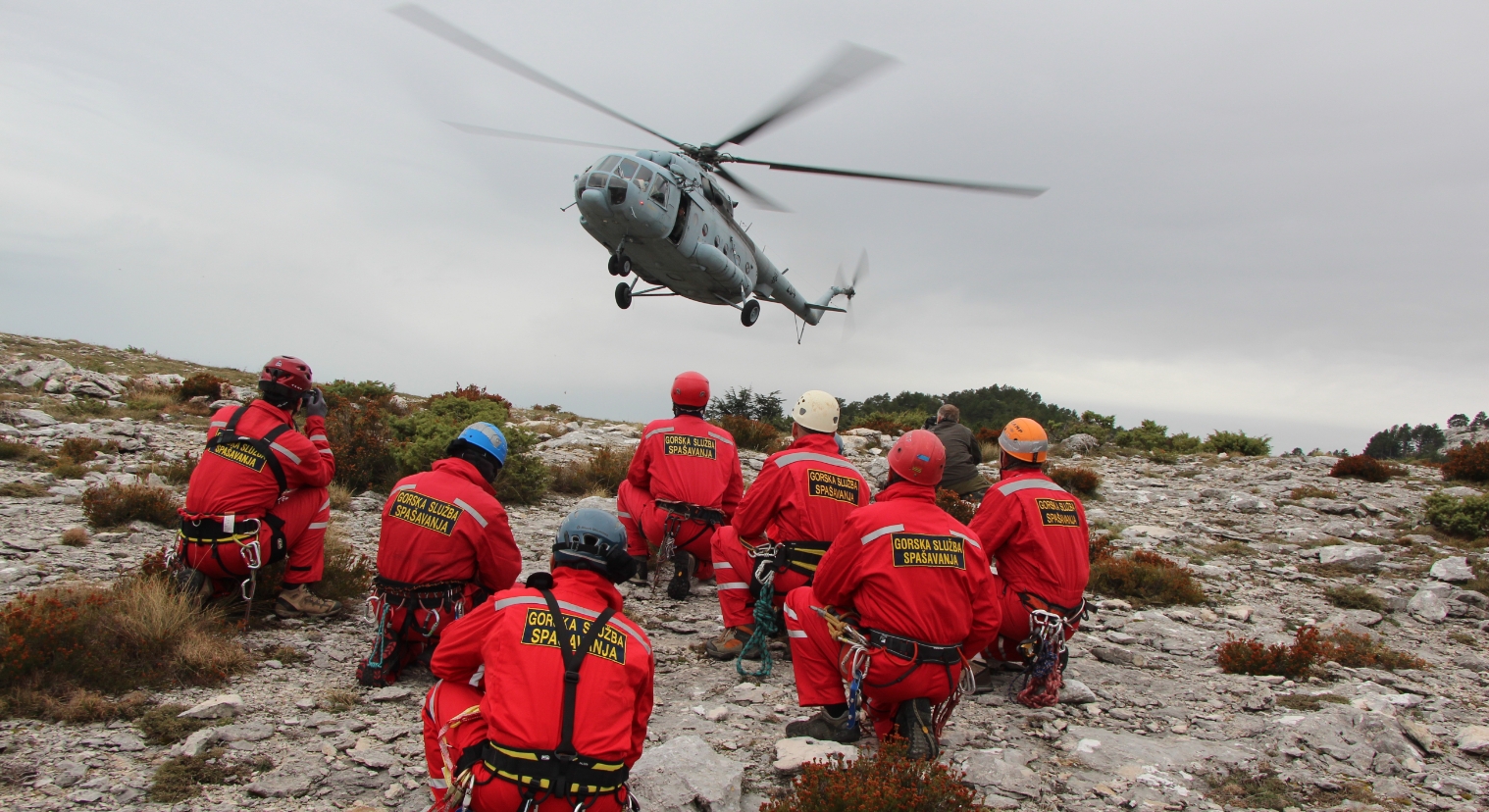
Members of the Croatian Mountain Rescue Service are often perceived by injured individuals as angels from heaven who have come to save them.

Volunteers – rescuers

Members of the Croatian Mountain Rescue Service (HGSS) are often seen by the people they have helped as angels from heaven who have come to save them. And rightfully so. These individuals are always ready to help, willing to board a helicopter, jeep, or boat in the middle of the night, taking on risks to their own lives just to assist someone in distress. Furthermore, they do not receive any salary for such dangerous work. They are volunteers, something that few people understand today.

In addition, they strive to share their knowledge and advice with everyone. On their website at https://www.hgss.hr/, you can find a wealth of useful information. Here, we highlight the basic tips regarding actions to take in the event of an accident:


In case of an accident:

  1. Maintain composure and calm yourself and others.
  2. Protect the injured person and yourself from immediate danger (such as falling, falling rocks, suffocation, cold, moisture, etc.) in the best possible way.
  3. Provide first aid to the injured person within the limits of your knowledge and capabilities.
  4. Mark the location of the accident or the location where the injured person is (especially in winter).
  5. Urgently notify HGSS about the accident – call 112.


Notification of an accident in the mountains or other difficult-to-access terrain where assistance from the Croatian Mountain Rescue Service (HGSS) is needed can be made:

  • Through the Unified Operational Communication Center at phone number 112.
  • Through the designated phone numbers of the Croatian Mountain Rescue Service stations (HGSS).
  • At HGSS information points, which are usually equipped mountain lodges marked with the HGSS logo and sign.
  • Via the police at phone 192.
  • Through emergency medical service stations at phone 194.
  • To any member of the Croatian Mountain Rescue Service (red jacket with HGSS logo and sign).


The accident report should include the following information:

  1. Name, surname, and telephone/mobile number of the person making the report for further contact.
  2. The source of information about the accident (as a witness or intermediary).
  3. The location of the accident (precise description).
  4. Information about the injured person (surname, name, age, address).
  5. Description of what happened (cause and type of injuries).
  6. Actions taken so far (type of initial first aid provided, who has been notified).
  7. Weather conditions at the accident site.
  8. Access route to the accident site.


Call for help:

In the mountains or on cliffs, a call for help is given through light or sound signals. The call and response should be repeated until a clear and intelligible connection is established. Call signals are given six times per minute, every other minute, and the response signals are given three times per minute, every other minute. Assuming the “Y” position (upright body with raised outstretched arms) signifies that assistance is needed, as well as firing a red flare.