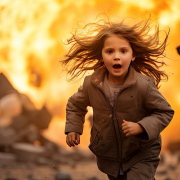
The fire and tragedy at a Swiss ski resort—where, in a country otherwise known for strict compliance with regulations, children lost their lives in a fire that appears to have occurred precisely because the rules were not followed—strike at the very core of the issues we address on our portal.

Even when appropriate rules are applied in high-risk places, that is no guarantee that something won’t go wrong. It is even less certain that someone else will protect you if you yourself have not done everything possible to at least reduce the consequences of a potential accident. It is unlikely that parents will go and inspect the venue where their child is attending a celebration to see what the conditions are like. It is impossible to predict what kind of foolish decision the venue owners might make—such as lining the ceiling with highly flammable, fast-burning material. And in a basement room, no less. Who could have imagined that someone would climb onto a friend’s shoulders and use sparklers to set the ceiling on fire? Many will say, “We did even stupider things when we were young.”

Still, if you have read the advice on our portal about behavior at events where large numbers of people gather, you could have learned how important it is to follow instructions on how to act once an accident has already occurred. It is clear that young people who are having a great time will not immediately grasp how dangerous a fire is in a room they cannot leave quickly, so they excitedly shout and record the initial fire on their phones (which at that moment could still be put out), instead of extinguishing it quickly or leaving the room.

Likewise, it is unlikely that any of the visitors, upon arrival, checked where the fire extinguishers were located or which route could be used to exit quickly. Yet these are small details that can sometimes save your life.

That is why we advise you to talk to your children before they go out. Warn them about possible dangers, even if it seems to you that they are not listening. There is a chance they will remember at least some advice and act responsibly in a dangerous situation. Read about the topics we cover on the Sigurno.info website and briefly explain them to your children at the right moment.

However, when we see reports of severe injuries that children suffer from holiday fireworks—when parents buy dangerous pyrotechnics for their children and, without any preparation, let them use devices containing amounts of explosive material comparable to a hand grenade—it is clear that, as parents, we ourselves could do much more.

(Illustration by Freepik)

How to respond to this question increasingly asked by concerned family members?

In the current global situation, with 190 armed conflicts ongoing and thousands dead or wounded worldwide (you can see detailed data HERE in a study published under the UCDP conflict research program), it’s not easy to provide an answer that won’t cause panic or depression. Due to the overwhelming wave of bad news, people are becoming more anxious and are starting to ask themselves and their families a key question – what should we do if the worst happens?

Although daily sensationalist news often turns out to be false, and the media frequently predicts the end of the world (if not from war, then from storms, disease, or some other disaster), which we somehow manage to survive – we should never underestimate human stupidity and destructiveness. Therefore, without panic, we should consider potential dangers and do everything we can to reduce the impact of crisis situations. Most importantly – try to follow information from reliable sources, without sensationalism or planted fake news. You can read more about that HERE.

As for war, unfortunately, we have experience and don’t need anyone to explain how people are capable of the worst atrocities (a term that is, at times, actually insulting to animals). Still, aside from the immediate danger of war, there are many associated risks such as disruptions in the supply of food, energy, transportation issues, and similar problems that affect millions of people.

It is also clear that in wartime conflicts, targets are not chosen carefully – civilians are deliberately and massively killed, and civilian infrastructure is destroyed. That too must be taken into account when planning protective measures.

As always in worst-case scenarios, important decisions must be made quickly: Should we stay or leave? When and where should we evacuate the children? Do we have enough food and water? These are questions we must prepare for in advance – assess the risks, agree on details within the family, and ensure we avoid creating panic, especially when informing children about such topics in an age-appropriate way.

> MILITARY SERVICE
One way to protect ourselves in wartime circumstances is to take up arms and defend ourselves. It’s clear that no sane person wants to send their children to “learn how to kill,” but we’re happy to send them to a self-defense course in case they are attacked. So it should be clear that military service can also be useful – if it is organized properly.

All of us who served in the military in the former state often considered our time in the Yugoslav People’s Army (JNA) as the most useless part of our lives, convinced we had learned nothing of value. However, as outdated and mentally numbing as the training was, we were wrong. Some of the skills we learned later helped us aid people in distress and defend ourselves against aggression.

Still, it’s important to understand that assessing the safety of your family isn’t only about worst-case war scenarios.

> COTTAGE / HOLIDAY HOME
After the pandemic and earthquakes, it became clear that a weekend house, coastal cottage, or family home in the countryside can serve as a practical shelter for a few days during a crisis. Thinking about having enough food and drinking water at such locations isn’t just a concern for preppers or those expecting doomsday. Talk to your family and friends about alternative accommodation options if you don’t have one of your own.

> SUPPLY
You can read more on our website about the challenges of supply chains in crisis situations. Many well-organized Western countries have detailed guidelines for citizens – how to prepare for survival in emergencies, including wartime conditions. Consider creating a small stockpile of food and water for a few days.

> TRANSPORT
In crisis situations, make sure you have a full fuel tank in case evacuation becomes necessary, stay up to date on traffic conditions (via HAK info, mobile traffic apps), and prepare a bag with essential gear. You can read more about this HERE.

> INFORMATION AND COMMUNICATION
Real-time information about a crisis is essential for making decisions. Today, modern systems provide information not only through the internet, radio, and TV, but also via a wide variety of mobile apps – it’s important to test these and learn how to use them.

Of course, don’t forget about potential problems with mobile network availability or internet access. Be ready to rely on a radio receiver – even amateur (HAM) radios – for critical information.

> SHELTERS
During the Homeland War, we learned the importance of shelters. It’s a good idea to check with local authorities where the shelters are located, what condition they’re in, or what you can do to improve protective measures in your own home. It’s also an opportunity to evaluate your home’s safety not just for wartime, but for other disasters such as natural catastrophes, fires, floods, lightning strikes, or access for emergency vehicles.
It’s also wise to read up on survival equipment and procedures – there are plenty of resources available online, including on our own website HERE.

In any case, whatever happens – don’t panic. Prepare reasonably and according to your capabilities, keeping in mind that the worst may never come.

(Illustration: Freepik)

Important advice for victims of violence against women – what to do and who to turn to?

Violence against women in the family or workplace is a problem that is talked about a lot today, but little is done about it. It’s sad to hear that Croatia is among the three countries in the European Union with the highest number of murdered women per capita. The murder of a woman is mostly the culmination of years of violence that begins with psychological abuse, insults, and taking control of the partner’s psyche and finances, and continues with physical violence. One blow usually never remains the last. At the moment when the partner uses force, the woman is already mentally and emotionally trapped and unable to leave. Witnesses often lacks understanding and does not want to get involved, and prejudices and cynical comments about women who “daring the devil” certainly do not encourage anyone to seek protection.

Because of all of that, if you are a victim of violence in Croatia:

  • Report the violence to the police.
  • Don’t blame yourself for not leaving earlier or not reporting it earlier.
  • Seek advice from one of the free helpline numbers for assistance:
  • Women’s Counseling Center: 0800 55 44
  • Telephone for Victims of Sexual Violence: 01 6119 444
  • Women’s Aid Now: 0800 655 222
  • SOS Telephone for Victims of Human Trafficking: 0800 77 99 SOS
  • Helpline for Women:
    • Karlovac – 047 600 392
    • Pakrac – 034 411 780
    • Poreč – 052 452 746
    • Rijeka – 051 211 888
    • Sisak – 044 888 888
    • Slavonski Brod – 035 449 180
    • Split – 021 537 272
    • Vukovar – 032 414 910
    • Zadar – 023 332 059
  • Seek psychosocial support, legal advice, and accommodation in a shelter.

Important: The most dangerous moment for a woman is when she leaves the abuser, so it is important to prepare well. It usually takes years for a woman to gather the courage to report and leave. No, it won’t get better. No, he won’t change for the better. People only change if they want to themselves, with psychosocial support. When you decide to leave the cycle of violence and immediately leave the abuser, don’t forget to take with you:

  • Items that are exclusively your personal belongings
  • Official documents (passport, yours and your children’s health insurance cards, ID card, marriage certificate, property ownership documents, children’s birth certificates, school records, and any other necessary documents)
  • Necessary medications
  • Keys
  • Money
  • Essential clothing and footwear
  • Your child’s favorite toy, school bag, and books.

You can find important advice for victims of violence on the Ministry of Interior’s website (on Croatian): –> HERE

You can find a well-made brochure with tips here (Croatian): –> HERE

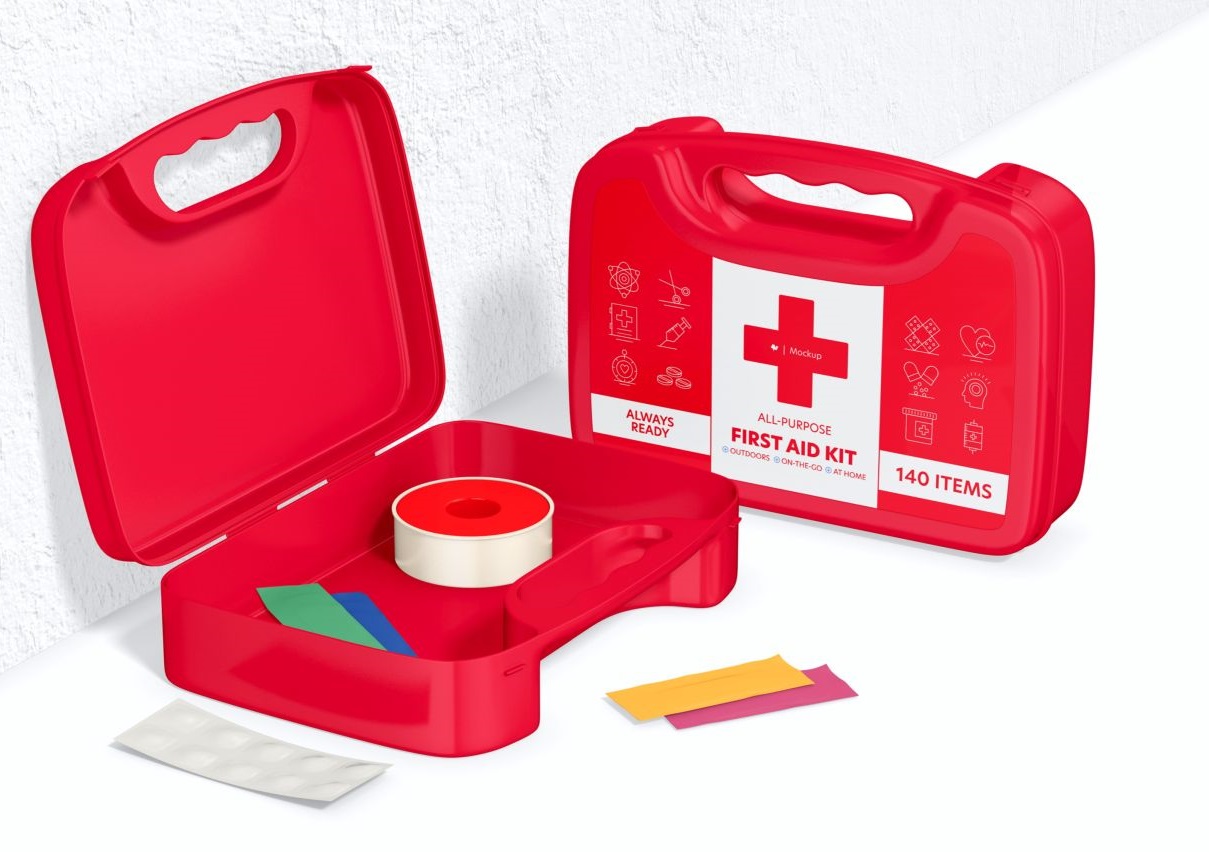
In Croatia, most of us still don’t have a serious first aid kit at home. Although there are no recent studies on households’ readiness with first aid kits, according to available data, a small number of households in Croatia have taken basic measures to prepare for providing first aid in case of accidents at home.

All of us have standardized first aid kits (in Croatia that is norm HRN 1112) in our cars, regulated by laws (Road Traffic Safety Law) with prescribed penalties (otherwise we wouldn’t have them at all). It’s a different story at home. Home medicine cabinets often contain expired drugs, old first aid materials that are no longer sterile, or are incomplete.

On the other hand, there is no real choice of ready-made home first aid kits on the market (there are quite expensive kits for occupational safety), and what is available is often overpriced or poorly assembled. However, there are exceptions, and recently one well-known retail chain introduced a small, multi-purpose first aid kit to the market, priced at only 5 Euro. Even professionals do not always agree on the content of a home first aid kit, but it generally consists of similar contents.

  • Home first aid kit:
    Current medicine therapy you use
    Box of aspirin
    Thermometer
    Regularly check and replenish the kit as needed
    Check the expiration date and replace expired products
    First bandage 12 cm x 5 m with a pad 12 cm x 16 cm
    First bandage 8 cm x 3 m with a pad 9 cm x 11 cm
    Sterile hydrophilic gauze (10 x 10 cm)
    Calico bandage 8 cm x 5 m
    Calico bandage 4 cm x 5 m
    Bottle of disinfectant
    Bottle of hydrogen peroxide
    Aluplast for burns 80 cm x 50 cm
    Cold pack
    Sterile gauze pad 5 cm x 5 cm, 16 layers
    Sterile gauze pad 10 cm x 20 cm, 12 layers
    Band-Aids 10 cm x 8 cm, 5 pieces
    Self-adhesive tape 2.5 cm x 5 m
    Triangular cloth 100 cm x 100 cm x 140 cm
    Safety pins, 10 pieces
    Packet of sanitary cotton
    Scissors with rounded tip, 1 piece
    Disposable gloves (PVC)
    Rubber band for tightening
    Metalized polyester foil 150 cm x 200 cm
    Protective foil for artificial respiration
    List of contents of the home first aid kit
    Reminder for providing first aid

On the global market, there are general and specialized first aid kits like General home kit, travel and hiking, kit for the sea (boats), for burns, for traffic (car, motorcycle, or boat), etc.
So we will describe examples on those product as well.

Amog other things we are preparing review of the professional kits used by Emergency medical services, Croatian Mountain Rescue Service, Firefighters, Civil Protection and other emergency professionals.

The Croatian app Zuluhood, developed by the company Brombul, has become a global security hit. At the largest electronics trade show in the world in Las Vegas, the mobile app was presented as the “Uber for home security.”

This Croatian app is unique in that it offers a new way to ensure the safety of your home and family, allowing you to quickly and easily order the services of security guards or even utilize “your own forces” for your security needs.

With just one click on your mobile phone, you can order a home check service while you are away, conduct quick crisis communication within your family, or ask your friends for help in an emergency. When danger arises, your family becomes an organized Tribe, aided by trusted individuals called Watchers within the app, who can check what’s happening and even visit your apartment, house, or vacation home and send you a report.

Depending on your existing security equipment and preferences, licensed professional security guards can be hired to carry out these tasks, even appearing in the middle of the night, for example, to check your seaside vacation home, send you reports and photos, and, if necessary, protect the location until you arrive. Conversely, when you’re on vacation, someone can keep an eye on your apartment.

You can easily download the free Zuluhood application on your mobile device and simply register yourself, family members, and if desired, trustworthy friends, neighbors or other individuals. Currently in Croatia, you have access to professionals from three security agencies whose services may be needed in emergency situations, as well as for organizing events such as parties, weddings, and other occasions where discreetly maintaining order is necessary. Nevertheless, engagement of securitty companies through Zuluhood in other countries will be avelable as soon as possible.

If you already have security systems such as cameras, sensors, or other devices from the “smart home” category, you can include those features in the unified Zuluhood system among you, members of your “tribe,” your assistants, as well as professional security personnel, in such a way that you can quickly respond in case of need, rather than only later discovering that someone has caused you harm.

New practical services are also being prepared for this application, such as caring for elderly persons, and we will test all the possibilities and publish the results on the Sigurno.info website. You can find more information about the application HERE.